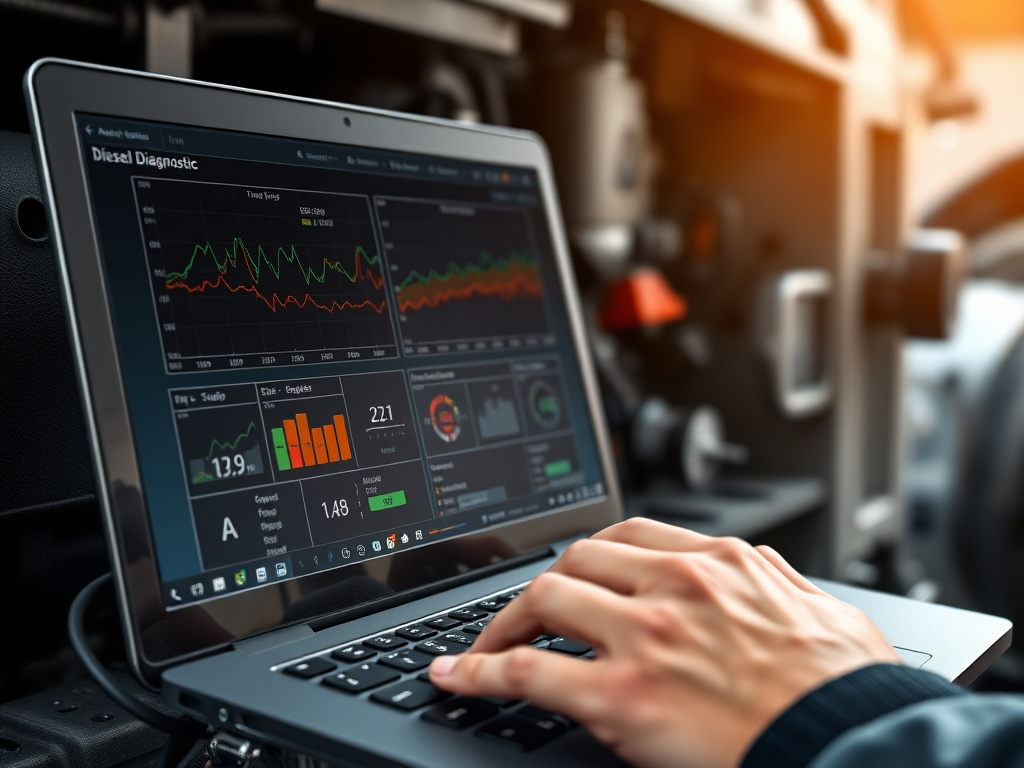
When it comes to the complex world of diesel engines, understanding their intricacies is paramount to maintaining optimal performance, ensuring longevity, and minimizing costly breakdowns. That's where diagnostic services step in as the unsung hero of the diesel repair industry — and it's why every job at Diesel Repair AZ in Mesa, Arizona starts here, not with a guess.
Why diesel diagnostics matter more than ever
Diesel engines built in the last two decades are, functionally, rolling computers. Electronic fuel injection, variable-geometry turbochargers, exhaust after-treatment systems, and dozens of sensors constantly report back to an engine control module (ECM) that adjusts timing, fuel delivery, and boost in real time. That sophistication is what makes modern diesel engines more powerful and efficient than ever — and it's also why a single symptom, like a check-engine light or a rough idle, can point to a dozen different root causes.
A shop that skips diagnostics and jumps straight to replacing parts is gambling with your money. We've seen trucks come into our Mesa shop after another shop swapped an injector, a turbo, or a sensor that wasn't actually the problem — the real fault was still there, and the customer paid twice. Diagnostics-first isn't a marketing line for us; it's the only way to guarantee a repair actually fixes what's wrong.
What a diagnostic appointment actually involves
When you bring a truck in for diagnostics at Diesel Repair AZ, here's what happens:
1. Full ECM code scan. We connect to the engine control module and pull every stored and pending trouble code, not just the one that triggered the check-engine light.
2. Live data review. Trouble codes tell you what system flagged an issue — live sensor data tells you why. We watch real-time readings for fuel pressure, boost, EGT (exhaust gas temperature), and more while the engine runs, which often reveals problems that don't throw a hard code at all.
3. Targeted system testing. Based on the codes and live data, we test the specific system that's likely at fault — fuel system pressure and injector performance, turbocharger boost and wastegate operation, or emissions components like the DPF, EGR, and SCR system.
4. A plain-language explanation. You'll get a clear rundown of what we found, what it means, and what it will cost to fix — before we touch a wrench.
Common issues diagnostics catch early
- Fuel system problems — failing injectors, a weakening high-pressure pump, or fuel contamination, often showing up as rough idle, hesitation, or lost fuel economy before a full failure.
- Turbocharger issues — boost leaks, a sticking wastegate, or bearing wear, which show up as power loss or unusual noise long before a catastrophic turbo failure.
- Emissions system faults — DPF regeneration failures, EGR valve sticking, or SCR/DEF system faults, which are common causes of DOT inspection failures and check-engine lights alike.
- Electrical and sensor faults — a failing sensor can trick the ECM into running the engine poorly even though every mechanical component is fine.
- Cooling and exhaust issues — sometimes flagged indirectly through engine temperature-related codes rather than an obvious coolant leak.
Signs it's time for a diagnostic check
You don't need a check-engine light to justify a diagnostic appointment. Bring your truck in if you notice:
- A check-engine, emissions, or DEF warning light
- Noticeable loss of power or acceleration
- Declining fuel economy without a clear cause
- Hard starting, especially in the morning
- Excessive black, white, or blue smoke from the exhaust
- Rough idle or unusual vibration
- A failed DOT or emissions inspection
Why Mesa, Arizona diesel owners choose diagnostics-first repair
Arizona's heat is hard on diesel cooling systems, turbochargers, and emissions components — components already running hot get pushed further in triple-digit summer temperatures. That means Mesa-area diesel trucks often show symptoms earlier than the same engine would in a cooler climate, and it also means a diagnostic scan needs to account for heat-related stress that a generic nationwide chain shop might not think to check.
At Diesel Repair AZ, our technicians combine deep diesel experience with the diagnostic equipment to back it up. We're not guessing based on what usually goes wrong with a given engine — we're reading the actual data from your specific truck.
What happens after diagnostics
Once we've identified the root cause, we'll walk you through your repair options and give you a clear cost estimate before any work begins. If the issue is minor, we can often complete the repair the same day. For more involved repairs — engine work, turbocharger rebuilds, or emissions system repairs — we'll give you a realistic timeline so you can plan around the downtime.
What diesel diagnostic equipment actually measures
It's worth understanding what's happening inside the diagnostic bay, because it explains why a proper scan takes longer than plugging in a handheld code reader for thirty seconds. Our diagnostic equipment communicates with the ECM over the same data bus the engine uses internally, which means we can see far more than a generic trouble code.
Fuel rail pressure is monitored in real time as the engine runs through idle, load, and RPM changes — a fuel system that reads fine at idle can still be failing under load, which is exactly the kind of intermittent fault that a static test misses entirely.
Boost pressure and wastegate duty cycle show us whether the turbocharger is spooling and holding pressure the way the ECM is commanding it to. A turbo that's down on boost will often trigger the ECM to compensate by adjusting fuel delivery, which can mask the real turbo problem as a fuel economy issue if you're not watching the right data.
Exhaust gas temperature (EGT) at multiple points in the exhaust stream tells us how the after-treatment system — the DPF, EGR, and SCR components — is actually performing, not just whether it threw a code. A DPF that's regenerating too often, or not regenerating enough, shows up here before it becomes a hard fault.
Fuel trim and O2/NOx sensor data reveal whether the engine is running the air-fuel mixture the ECM intends, which affects both performance and emissions compliance.
None of this data means much in isolation — it's the pattern across multiple readings, cross-referenced against the stored trouble codes and the truck's actual symptoms, that points to a specific root cause. That's the part a generic scan tool can't do on its own; it takes a technician who knows what a healthy reading looks like for the specific engine in front of them.
Diagnostics vs. "parts cannon" repair — why the difference matters to your wallet
In the diesel repair world, "parts cannon" repair is shorthand for a shop that responds to a symptom by replacing the most commonly-associated part first, and moving on to the next likely part if that doesn't fix it. It's faster to quote, but it shifts the cost of misdiagnosis onto the customer — you pay for parts and labor on components that were never actually broken.
We've had customers come to our Mesa shop after paying for a replacement turbocharger elsewhere, only for the underlying wastegate control fault to still be there because the actual problem was a wiring issue upstream of the turbo, not the turbo itself. A proper diagnostic scan would have caught that before any parts were ordered.
This doesn't mean diagnostics eliminate all uncertainty — some intermittent electrical faults or mechanical issues that only show up under specific load and temperature conditions can take more than one visit to fully pin down. But it means every repair we recommend is backed by actual data from your engine, not a statistical guess about what "usually" causes a given symptom.
How diagnostics tie into DOT compliance
For fleet operators and owner-operators, diagnostics aren't just about fixing a symptom — they're often the difference between passing and failing a DOT or emissions inspection. Many of the fault codes that trigger a check-engine light are the same underlying issues that show up on a roadside or annual DOT inspection: emissions after-treatment faults, sensor failures affecting reported emissions, or electrical faults affecting required safety systems.
Catching these through a proactive diagnostic visit, rather than finding out during an inspection, means you control the timing of the repair instead of scrambling to get a truck back in service after being placed out of service. See our DOT and safety inspection services for more on how we handle compliance-related repairs.
How often should you get diagnostics done?
Diagnostics aren't just for when something's already wrong. We recommend a diagnostic check:
- Whenever a warning light appears, regardless of how the truck is running
- As part of an annual or pre-DOT-inspection checkup, especially for fleet vehicles
- Before a long haul or heavy towing season, to catch marginal issues before they're pushed to failure
- After any major repair elsewhere, to confirm the fix actually resolved the underlying fault
- If fuel economy or power has gradually declined, even without a warning light
Frequently asked questions about diesel diagnostics
How long does a diagnostic appointment take? A standard diagnostic scan typically takes 30–60 minutes, though it can take longer if we need to test the engine under load or reproduce an intermittent fault.
Will diagnostics tell me exactly what repair I need? In most cases, yes — the combination of trouble codes, live data, and targeted testing usually narrows the issue down to a specific component or system. Occasionally, an intermittent fault requires a follow-up visit to fully confirm.
Is the diagnostic fee applied toward the repair? We'll go over pricing details when you schedule — call us at (844) 967-5247 for current diagnostic pricing.
Can you diagnose a truck that won't start? Yes — a no-start condition is one of the more common diagnostic visits we handle, and it's often traceable to fuel delivery, electrical, or sensor faults rather than a major mechanical failure.
How Arizona heat changes the diagnostic picture
Every diesel shop deals with the same fundamental systems — fuel, air, exhaust, cooling, electrical — but the environment a truck operates in changes which of those systems fails first and how urgently. Mesa and the greater Phoenix area routinely see summer ambient temperatures above 110°F, and that has real consequences for diesel diagnostics that a shop in a milder climate might not weight the same way.
Cooling system margin shrinks. A cooling system that's marginal — a slightly low coolant level, a partially clogged radiator, a weak fan clutch — has almost no buffer left when ambient air is already near 115°F. We pay close attention to coolant temperature trends during diagnostics, because a system that would run fine in a 70°F climate can push a diesel engine into a heat-related limp mode here.
Turbocharger and EGR stress increases. Both the turbocharger and EGR system deal with exhaust gas that's already hotter than normal intake air in extreme ambient heat. That accelerates wear on turbo bearings and increases the likelihood of EGR-related fault codes during summer months specifically — something we watch for when reviewing live data on a Mesa-based truck.
Battery and electrical faults spike seasonally. Extreme heat is harder on batteries and electrical connections than cold ever is, so summer diagnostic visits in Arizona see a higher proportion of electrical and sensor-related faults than the same fleet would show in a cooler region.
DEF and emissions system behavior shifts. Diesel exhaust fluid (DEF) quality and SCR system performance can be affected by extreme heat exposure during storage and operation, which is part of why we check DEF quality and SCR system data as part of emissions-related diagnostic visits for local trucks.
None of this changes the fundamentals of how diesel diagnostics work — but it does mean a technician who works on diesel trucks in the Mesa climate day in and day out builds an intuition for which systems to scrutinize first that a shop unfamiliar with desert operating conditions won't have. That local experience is baked into how we approach every diagnostic appointment.
Choosing a diagnostic shop: what to actually ask
If you're comparing diesel repair shops in the Mesa area, the diagnostic process is one of the clearest ways to tell a shop that's genuinely investing in doing the job right from one that's cutting corners. A few questions worth asking before you commit:
"What equipment do you use for diagnostics?" A shop relying on a basic generic code reader is going to miss the live-data nuance that catches intermittent faults. Factory-level or professional-grade diagnostic equipment that can pull manufacturer-specific data streams matters, especially for late-model emissions-heavy engines.
"Will I get an explanation, or just a code number?" A trouble code is a starting point, not a diagnosis. If a shop can't explain in plain language what the code means for your specific truck and what testing they did to confirm it, that's a sign they may be guessing.
"Do you diagnose before quoting a repair?" Any shop that quotes a specific part replacement before running diagnostics is skipping the step that actually confirms the fault. That's the parts-cannon approach described above, and it costs customers real money over time.
"Can you show me the data, not just tell me?" We're happy to walk customers through the actual live data readings and trouble codes we pulled, because it builds trust and it means you understand what you're paying to have fixed.
At Diesel Repair AZ, every one of these questions has a straightforward answer, because diagnostics-first isn't a policy we adopted for marketing — it's simply the only way we know to guarantee the repair we recommend is the repair your truck actually needs.
Schedule diagnostics at Diesel Repair AZ
If your diesel truck, van, or fleet vehicle is showing any of the signs above — or it's simply due for a checkup — reach out to Diesel Repair AZ, serving Mesa, Tempe, Chandler, Gilbert and the East Valley. We're open Monday through Friday, 6am to 6pm. Call (844) 967-5247 or request service online to get started.
Diagnostics aren't an upsell — they're how we make sure every dollar you spend on repair actually fixes the problem. Whether you're an owner-operator trying to keep one truck reliable or a fleet manager responsible for a dozen vehicles staying compliant and on schedule, starting with an accurate diagnosis is the single highest-leverage decision you can make before any wrench touches your engine. That's the standard we hold every diagnostic appointment to, and it's why customers come back to Diesel Repair AZ instead of chasing the next symptom from shop to shop, replacing part after part and hoping the next one is the one that finally fixes it.